Bile Duct Stones: Symptoms, Diagnosis, ERCP Treatment and When to Refer in Dubai
Bile duct stones (choledocholithiasis) can block the flow of bile. Dr. Appou diagnoses and treats them at Fakeeh University Hospital, Dubai.
Your guide to bile duct stones, from the warning signs to ERCP and gallbladder surgery, from a UK-trained Consultant General Surgeon with 35+ years of experience, now practicing at Fakeeh University Hospital, Dubai Silicon Oasis. By Dr. Appou Tamijmarane | MBBS, MS (Gen Surg), FRCS (Edinburgh), FRCS (Glasgow), FRCS (Gen Surg), CCT
Consultant General Surgeon specializing in HPB, Upper GI, and Advanced Laparoscopic Surgery
Fakeeh University Hospital, Dubai Silicon Oasis | DHA License No: 50530660-001 Published: November 2026 | Last reviewed: November 2026 | Reading time: 10 minutes Written for patients in Dubai with suspected or confirmed bile duct stones, and for the GPs who refer them.
Bile duct stones (choledocholithiasis) are gallstones in the main bile duct. Dr. Appou Tamijmarane, Consultant General Surgeon, diagnoses and treats them at Fakeeh University Hospital, Dubai Silicon Oasis, and performs both ERCP and gallbladder surgery.
Fever, jaundice and upper abdominal pain together can mean an infected bile duct (cholangitis). Go to an emergency department the same day.
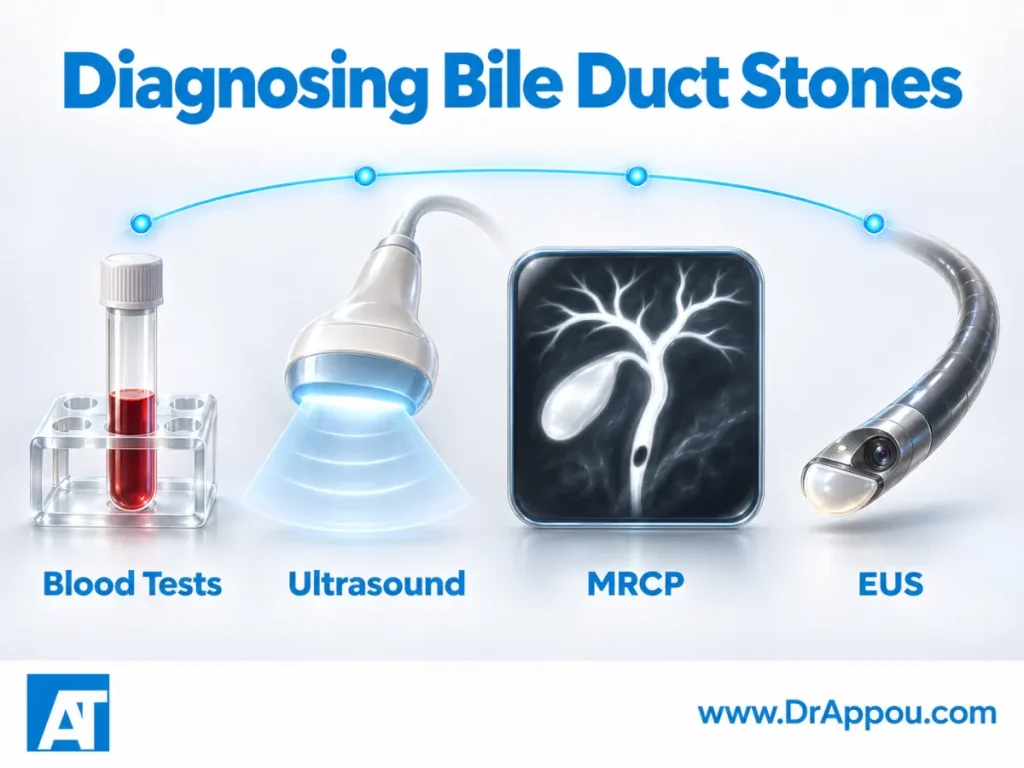
Diagnosis starts with liver blood tests and an ultrasound. An MRCP scan or endoscopic ultrasound confirms the stone before treatment.
Most stones are removed by ERCP, an endoscopic procedure with no surgical cuts. For some patients, the duct can be cleared during keyhole gallbladder surgery in a single operation.
If your gallbladder is still in place, removing it is usually recommended soon after the duct is cleared, ideally within two weeks.
GPs can refer directly. Suspected cholangitis, gallstone pancreatitis or worsening jaundice needs same-day emergency assessment.
Bile duct stones are one of the more urgent gallstone problems I treat. A stone that slips out of the gallbladder and lodges in the common bile duct can block the flow of bile, causing pain, jaundice, infection or pancreatitis. UK guidance estimates that bile duct stones affect 10 to 20% of people with symptomatic gallstones. [5]
In this guide, I explain the warning signs that need same-day care, how the diagnosis is made, how I decide between ERCP and clearing the duct during gallbladder surgery, and what happens afterwards. There is also a section for GPs on what to include in a referral.
You can read more about my background, training, and approach on my About page.
Bile is a digestive fluid made in the liver, stored in the gallbladder and released through the common bile duct into the small intestine. It contains water, cholesterol, bile salts and bilirubin, a yellow pigment from the normal breakdown of red blood cells.
How do gallstones form?
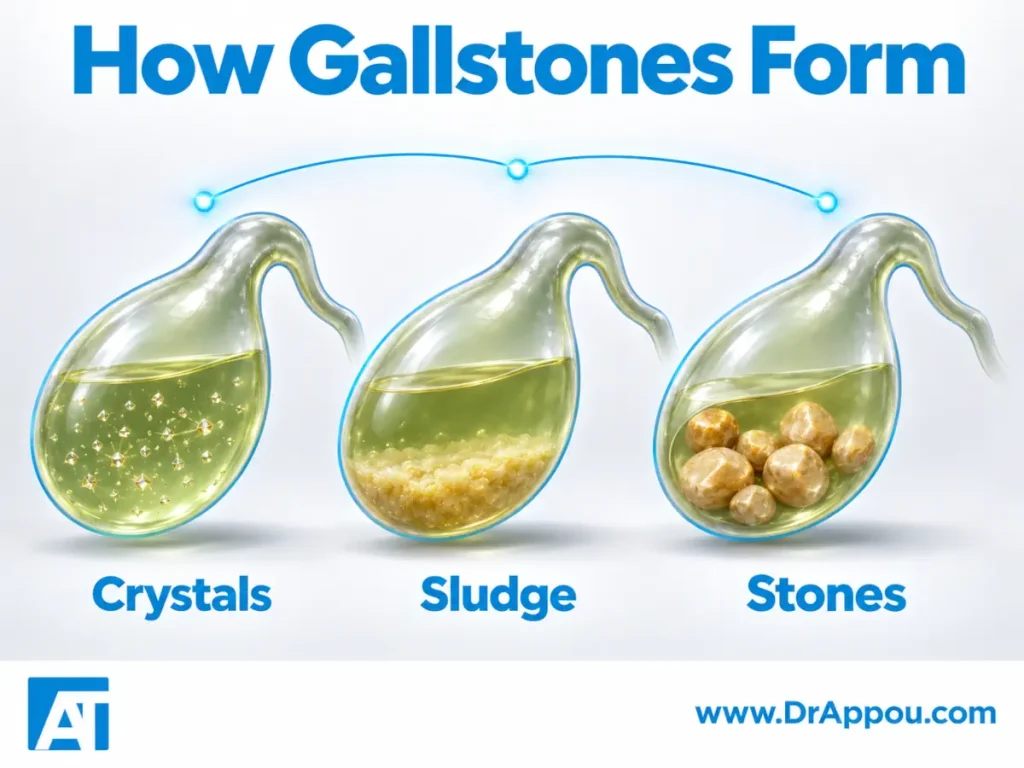
Gallstones develop in stages, as crystals in over-concentrated bile form sludge and slowly grow into stones.
Normally, bile salts keep cholesterol dissolved. Gallstones form when that balance is lost, in three stages: [15]
The bile becomes over concentrated. If the liver releases more cholesterol or bilirubin than the bile salts can keep dissolved, the bile becomes supersaturated.
Crystals and sludge form. The excess comes out of solution as microscopic crystals, which mix with mucus to form a thick paste called biliary sludge.
Sludge grows into stones. If the gallbladder does not empty fully or often enough, for example during fasting, rapid weight loss or pregnancy, the crystals clump together. Over months or years they grow into stones, from the size of a grain of sand to a golf ball.
Most gallstones are made mainly of cholesterol; pigment stones, made mainly of bilirubin, are less common. Most gallstones stay in the gallbladder, but smaller stones can slip out into the bile duct.
How do stones end up in the bile duct?
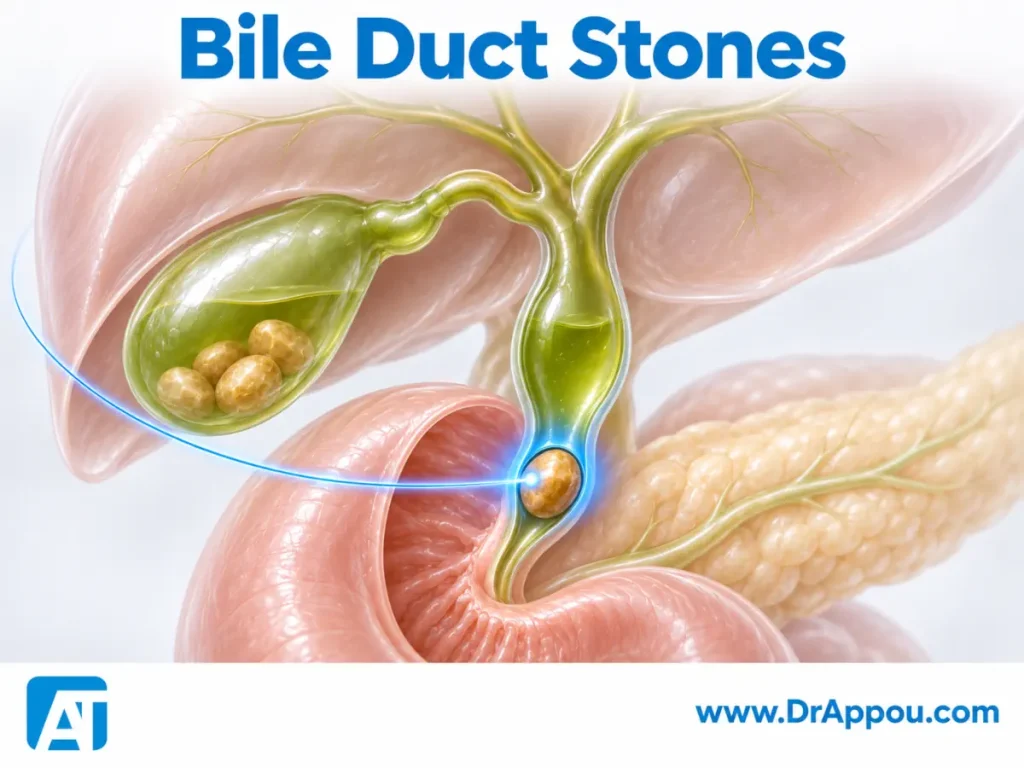
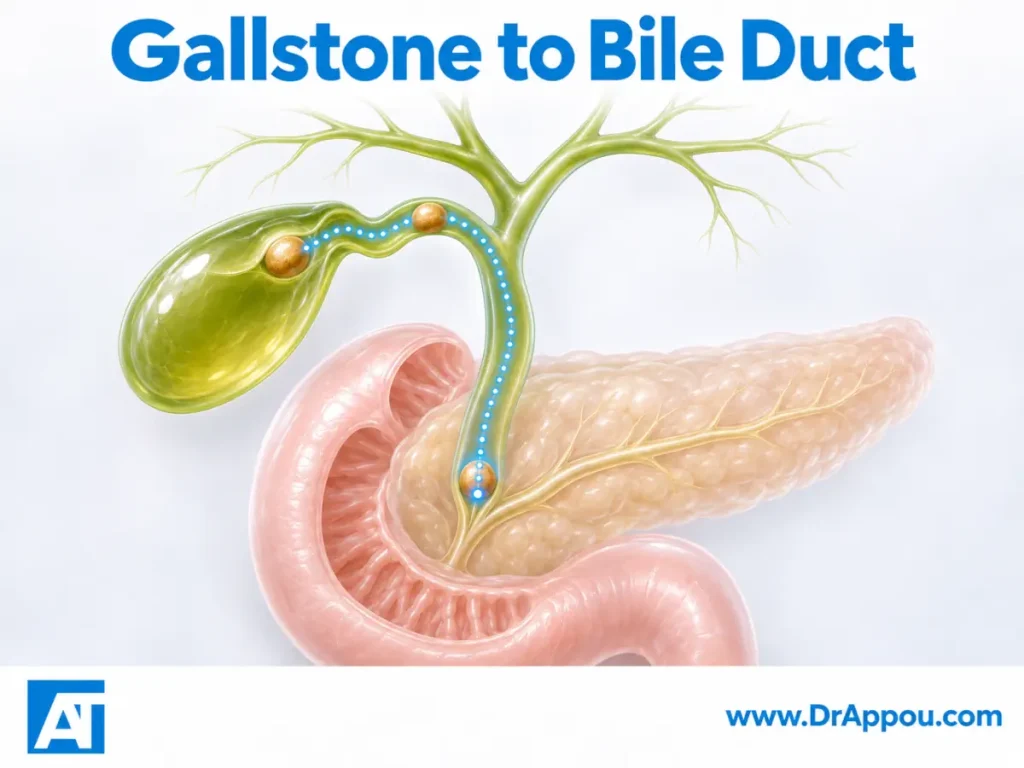
Most bile duct stones begin in the gallbladder. The common bile duct joins the pancreatic duct near its opening, which is why a stone here can also trigger pancreatitis.
Bile duct stones, also called common bile duct stones or choledocholithiasis, usually arise in one of three ways:
A gallstone slips out of the gallbladder and lodges in the common bile duct. This is the most common route.
A stone forms in the duct itself, sometimes years after the gallbladder has been removed. These are called primary or recurrent duct stones.
A stone is left behind after earlier gallbladder surgery or ERCP. These are called retained stones.
What are the symptoms of bile duct stones?
Some bile duct stones cause no symptoms and are found on a scan done for another reason. When they do cause symptoms, patients most often describe:
Pain in the upper right or center of the abdomen, sometimes spreading to the back
Dark, tea-colored urine and pale, clay-colored stools
Itching of the skin
Nausea and vomiting, often after a fatty meal
Fever or chills, which suggest infection
Dark urine with pale stools is a strong clue that bile is not reaching the bowel. It should always be checked by a doctor.
When are bile duct stones an emergency?
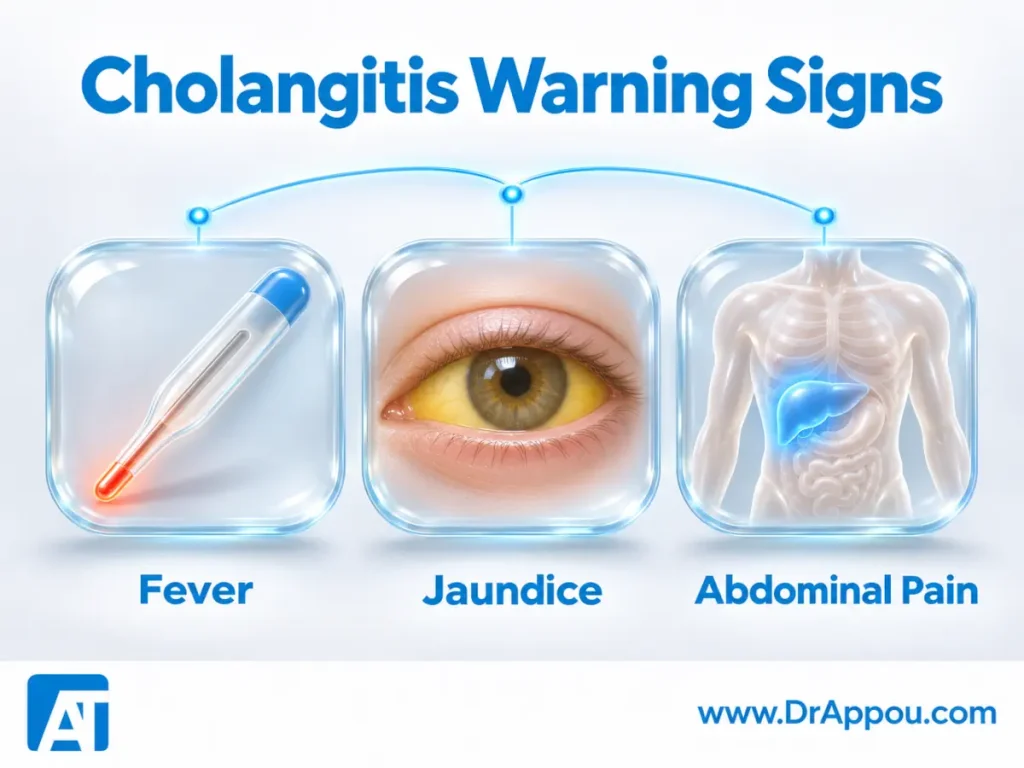
Fever, jaundice and upper abdominal pain together can mean an infected bile duct. Go to an emergency department the same day.
Go to an emergency department the same day. Do not wait for a routine appointment. Warning signs include any of the following:
Fever or shivering (rigors), yellowing of the skin or eyes, and pain in the upper abdomen, together or in quick succession
Confusion, drowsiness, dizziness on standing or severe weakness
Persistent vomiting or being unable to keep fluids down
Severe upper abdominal pain spreading to the back, which can signal gallstone pancreatitis
These signs can mean the bile duct is blocked and infected (cholangitis), or that a stone has triggered pancreatitis. Both need urgent hospital treatment.
A stone blocking the bile duct can allow the bile to become infected. This is called acute cholangitis, and it can progress to sepsis within hours. It is treated with antibiotics, fluids and drainage of the bile duct, usually by ERCP. International guidance recommends that severe cholangitis is drained as soon as possible, and within 12 hours in septic shock. [3][6] Antibiotics alone are not enough for most patients. [7]
How are bile duct stones diagnosed?
A normal ultrasound does not rule out a small stone in the lower duct, so an MRCP scan or endoscopic ultrasound is used to confirm it before treatment.
Liver function tests. A raised bilirubin, alkaline phosphatase (ALP) and GGT suggest the duct is blocked. A raised CRP or white cell count suggests infection.
Abdominal ultrasound. This shows gallstones and whether the common bile duct is dilated. It often misses small stones in the lower duct, so a normal scan does not rule them out.
MRCP. This is a specialized MRI scan of the bile ducts, with no needles or radiation. It is the usual next step if the duct is dilated or the blood tests are abnormal.
Endoscopic ultrasound (EUS). This is used when MRCP is unclear or a very small stone is suspected.
ERCP (endoscopic retrograde cholangiopancreatography). I use this to treat, not simply to look. Confirming the stone first matters: in one 2026 study, 28% of suspected stones had already passed on their own by the time of the procedure. [11]
How are bile duct stones removed?
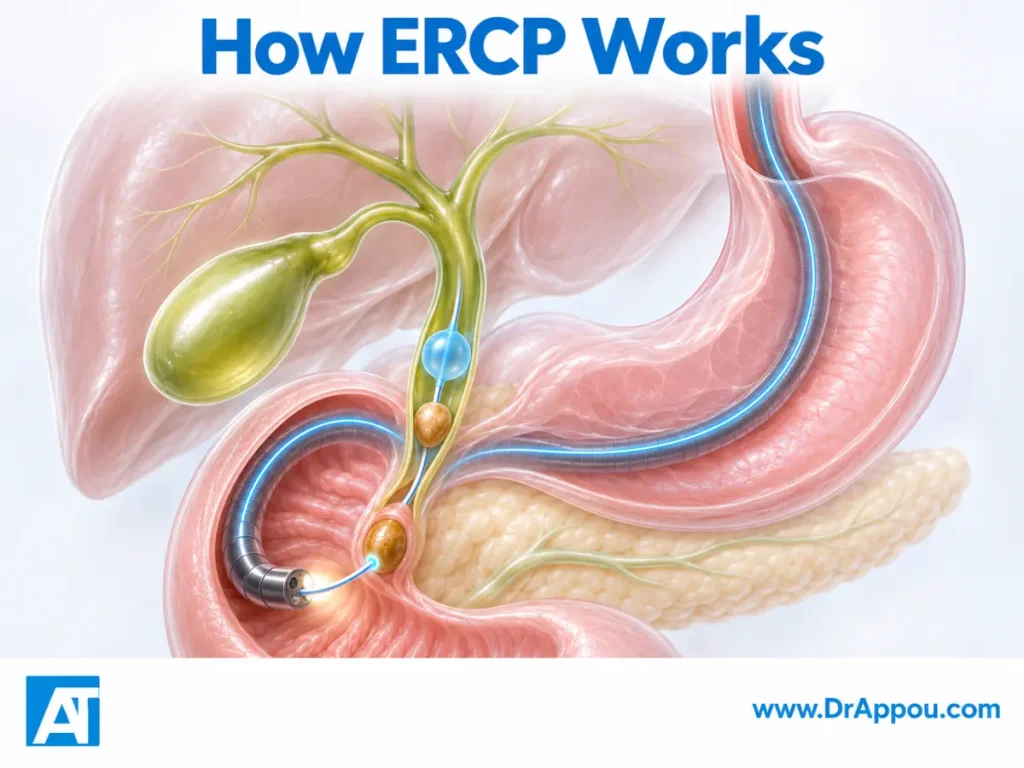
During ERCP, a flexible camera passed through the mouth is used to widen the duct opening (sphincterotomy) and remove stones with a balloon or basket, with no surgical skin cuts.
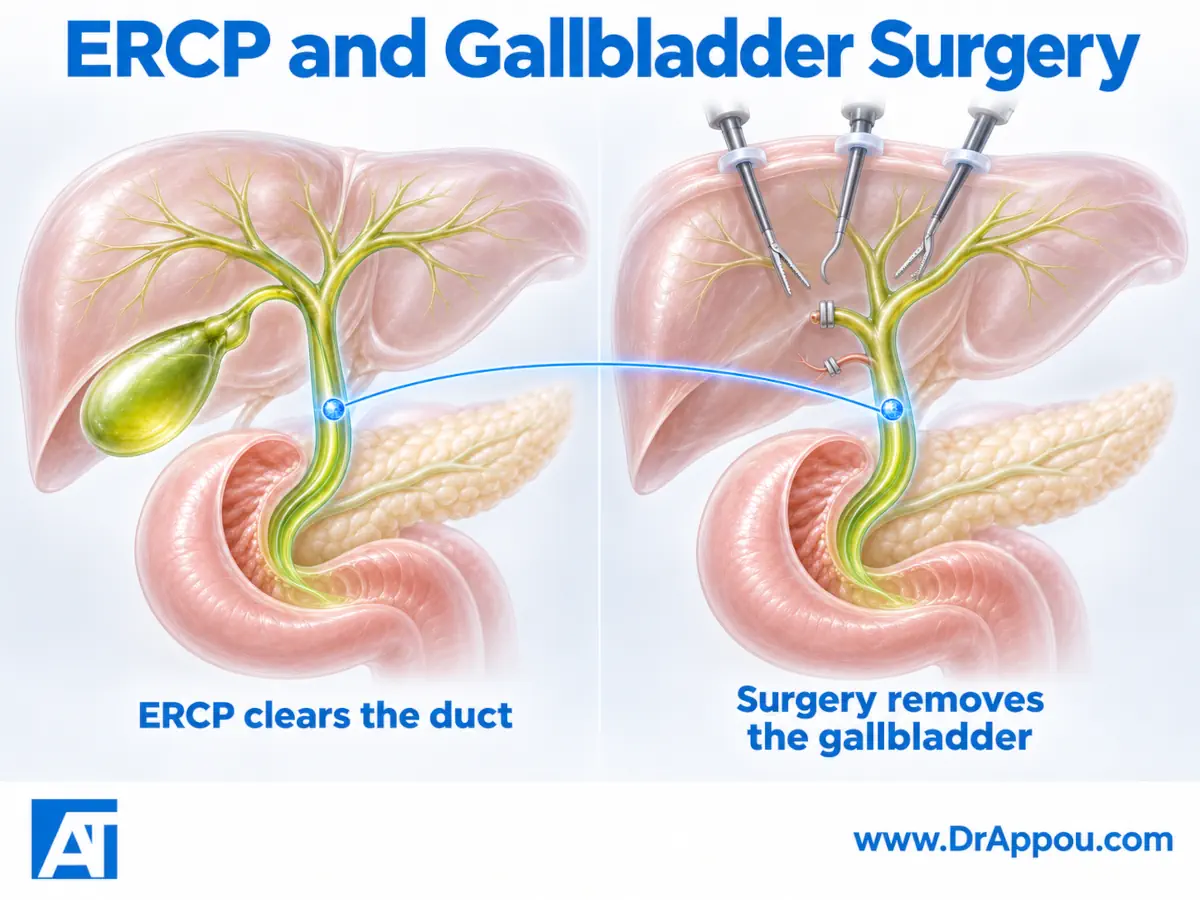
Guidelines recommend clearing bile duct stones and, in fit patients, removing the gallbladder. [1][3] Patients often ask me whether ERCP removes the gallbladder. It does not. The treatments do different jobs:
Treatment options for bile duct stones
Treatment
What it does
How it is done
May suit
ERCP
Clears stones from the bile duct. The duct opening is widened (sphincterotomy) and stones are pulled out with a balloon or basket. A temporary stent may be placed.
A flexible camera passed through the mouth, under sedation or anesthesia. No surgical cuts.
Most patients, urgent drainage in cholangitis, and stones after previous gallbladder removal
ERCP and cholecystectomy in one session
Clears the bile duct by ERCP and removes the gallbladder during the same visit to the operating theater
ERCP followed by keyhole or robotic gallbladder removal, under one general anesthetic
Selected patients who need both procedures and are fit for surgery
Laparoscopic bile duct exploration
Clears the duct during gallbladder removal, as a single-stage operation. For suitable patients this avoids a separate ERCP. [13]
Keyhole surgery under general anesthetic
Selected patients having gallbladder surgery, depending on the stones and anatomy
Laparoscopic or robotic cholecystectomy
Removes the gallbladder, where most stones form
Keyhole or robotic surgery under general anesthetic
Most fit patients once the duct is clear
Which treatment is right for me?
Which route is right depends on the stones, the anatomy and how fit the patient is. Because I perform both ERCP and gallbladder surgery, I can plan the whole pathway with my patients. Where it is suitable, I can do both procedures during the same visit to the operating theater, under one anesthetic. This avoids a second procedure and, often, a second hospital admission, which can mean a single recovery period and a lower overall cost of treatment. You can read more about the procedure in my article on ERCP for obstructive jaundice and bile duct stones.
What are the risks of ERCP?
ERCP is effective, but it is not risk-free. I discuss these figures with every patient before the procedure:
Post-ERCP pancreatitis, the most common specific risk
About 3 to 10% across studies, usually mild [4][12]
Bleeding, perforation of the bowel or duct, infection
Less common; I will explain how they apply to you
Pancreatitis is more likely when ERCP is done for stones that cause no symptoms. In a 2026 Japanese study, it occurred in 9.7% of patients without symptoms compared with 2.7% of matched patients with symptoms. [12] Steps such as anti-inflammatory medication given at the time of ERCP help reduce this risk. [5][14]
Do I still need my gallbladder removed after ERCP?
ERCP clears the bile duct but does not remove the gallbladder. Where suitable, Dr. Appou can perform both under one anesthetic.
If your gallbladder is still in place, I will usually recommend removing it. Clearing the duct does not deal with the source of the stones. A 2026 Swedish study of more than 9,500 patients with gallstone pancreatitis found that around 1 in 5 who had ERCP alone went on to have further gallstone complications. [8] European guidance recommends surgery within two weeks of ERCP, [3] and a 2026 analysis of seven trials found surgery within 72 hours led to fewer conversions to open surgery and fewer wound infections. [9]
What happens after ERCP?
After ERCP, most patients are observed for several hours or overnight. You will usually start with clear fluids and return to a normal diet once the team is happy. Blood tests are often repeated to confirm the jaundice is settling.
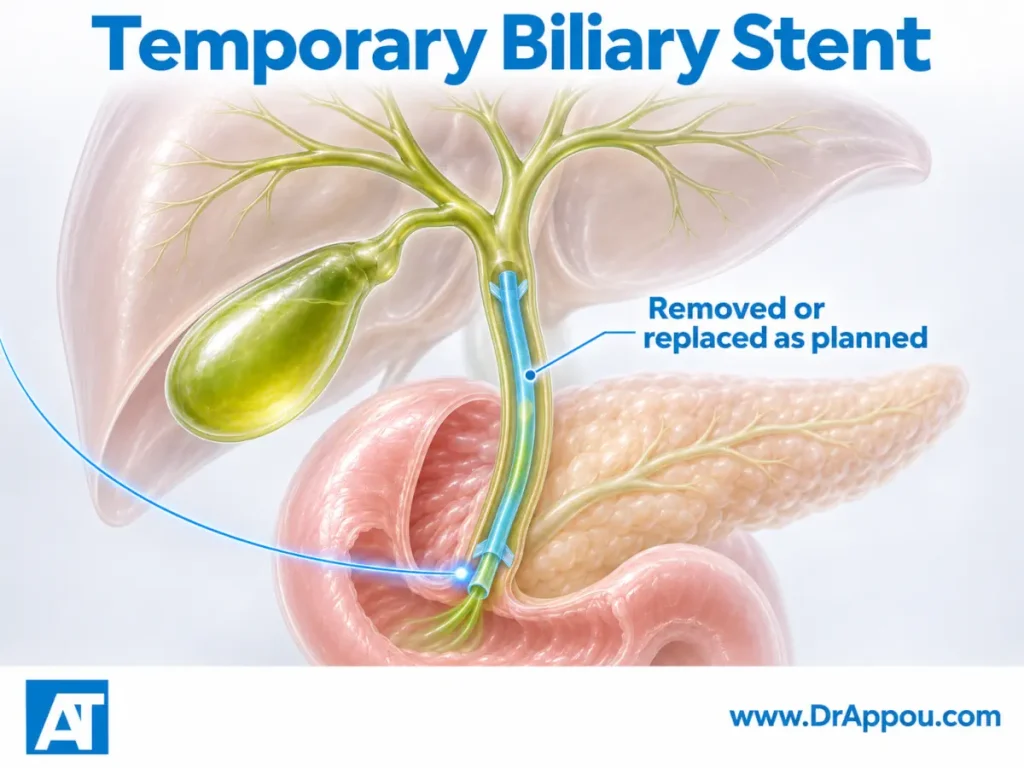
A stent keeps bile draining after ERCP. It is temporary and must be removed or replaced as planned.
If you have a stent, it is temporary and must be removed or replaced as planned. [1] Contact us or seek urgent care if you develop fever, worsening pain, vomiting, black stools or returning jaundice after ERCP.
How should GPs refer a patient with suspected bile duct stones?
For referring doctors
Send for same-day emergency assessment if you suspect cholangitis, biliary sepsis or gallstone pancreatitis, or if jaundice is worsening, pain is uncontrolled or the patient is deteriorating. UK quality standards set ERCP within 72 hours of diagnosis for stones causing jaundice, and within 24 hours when emergency ERCP is needed. [2]
What to include in a referral
For urgent outpatient referral, please include:
Symptom onset and severity, including fever, rigors, jaundice, dark urine, pale stools, itching or vomiting
Vital signs and examination findings, including signs of sepsis or dehydration
Full blood count, liver function tests (bilirubin, ALP, GGT, ALT), CRP, renal function and coagulation profile
Amylase or lipase if pancreatitis is suspected
Ultrasound, CT or MRCP reports, noting duct diameter and any visible stones
Previous gallstones, pancreatitis, ERCP, stents or cholecystectomy
Current medications, especially anticoagulants, antiplatelets and diabetes medicines, plus allergies
Relevant comorbidities and anesthetic risk factors
Anticoagulant and antiplatelet details are especially important, as they affect when ERCP and sphincterotomy can safely go ahead. I welcome direct referrals from GPs across Dubai.
Where can I be treated for bile duct stones in Dubai?
I see patients at Fakeeh University Hospital in Dubai Silicon Oasis, close to Academic City, Mirdif and Dubailand. Patients travel from across Dubai, the wider UAE and overseas. Consultations are face to face or online, in English or Tamil, and a translator can be arranged for other languages.
Tests and treatment: blood tests, ultrasound, MRCP, endoscopic ultrasound, ERCP and keyhole or robotic gallbladder surgery are available at Fakeeh University Hospital.
Insurance: coverage and pre-authorization vary by policy. Check the insurance list on the Okadoc booking page, or confirm with the Fakeeh University Hospital insurance desk before treatment.
What to bring: blood test and scan reports, a list of your medicines (including any blood thinners), and your insurance card.
How to book
To book a consultation, use the Okadoc booking system or call the Fakeeh University Hospital booking line on +971 4 414 4444. If you would like to speak with me before booking, you can message me on WhatsApp.
In summary
Bile duct stones are gallstones in the main bile duct. They can cause pain, jaundice, infection or pancreatitis.
Fever, jaundice and upper abdominal pain together need same-day emergency care.
Diagnosis uses blood tests and ultrasound, then MRCP or endoscopic ultrasound to confirm the stone.
Most stones are removed by ERCP. Some can be cleared during keyhole gallbladder surgery in one operation.
If the gallbladder is still in place, removing it soon after the duct is cleared is usually recommended.
Frequently Asked Questions: Bile Duct Stones in Dubai
What is the difference between gallstones and bile duct stones?
Gallstones form in the gallbladder, and most stay there. Bile duct stones are gallstones that have moved into, or formed in, the common bile duct, the tube that carries bile to the bowel. Because they can block bile flow, bile duct stones are more likely to cause jaundice, infection or pancreatitis, and they usually need removing.
Are bile duct stones dangerous?
They can be. A blocked bile duct can become infected (cholangitis) or trigger gallstone pancreatitis, and both need hospital treatment. Fever, jaundice and upper abdominal pain together need same-day emergency assessment. Stones found early can usually be removed safely by ERCP or during gallbladder surgery.
Can bile duct stones pass on their own?
Small single stones sometimes do. In one 2026 study, 28% of suspected stones had already passed by the time of the procedure, which is why Dr. Appou confirms the stone is still there before ERCP. Larger or multiple stones usually need removing, because a blocked duct risks infection and pancreatitis.
Does ERCP remove the gallbladder?
No. ERCP clears stones from the bile duct using a flexible camera passed through the mouth, without surgical cuts in the skin. The gallbladder, where most stones form, is removed separately by keyhole or robotic surgery.
Do I still need gallbladder surgery after ERCP?
In most fit patients, yes. Leaving the gallbladder in place means new stones can enter the duct again. Guidelines recommend removing it within two weeks of ERCP, and earlier surgery is linked to fewer complications. Dr. Appou plans the timing around your recovery.
Can bile duct stones come back after my gallbladder is removed?
Yes, although it is uncommon. A 30-year UK series of 1,447 patients found recurrent stones in about 4% after surgical duct clearance. Recurrent stones can usually be treated with ERCP.
What if a stone was found on a scan but I have no symptoms?
International guidance recommends removing bile duct stones in patients fit for treatment, even without symptoms. The risk of pancreatitis after ERCP is higher in people without symptoms, so Dr. Appou discusses the benefits and risks with you before deciding.
Can I see Dr. Appou online or in Tamil?
Yes. Consultations are face to face at Fakeeh University Hospital, Dubai Silicon Oasis, or online, in English or Tamil. A translator can be arranged for other languages.
How do I book a consultation for bile duct stones?
You can book with Dr. Appou Tamijmarane at Fakeeh University Hospital in Dubai Silicon Oasis through the Okadoc booking system or by calling the hospital booking line on +971 4 414 4444. To speak with Dr. Appou before booking, you can message him on WhatsApp. If you have fever, jaundice and abdominal pain, do not wait for an appointment. Go to an emergency department.
National Institute for Health and Care Excellence. Gallstone disease: diagnosis and management (CG188). 2014. nice.org.uk/guidance/cg188
National Institute for Health and Care Excellence. Gallstone disease (QS104). nice.org.uk/guidance/qs104
Manes G, Paspatis G, Aabakken L, et al. Endoscopic management of common bile duct stones: European Society of Gastrointestinal Endoscopy (ESGE) guideline. Endoscopy. 2019;51:472-491. esge.com
ASGE Standards of Practice Committee, Buxbaum JL, Abbas Fehmi SM, et al. ASGE guideline on the role of endoscopy in the evaluation and management of choledocholithiasis. Gastrointest Endosc. 2019;89(6):1075-1105. PMC8594622
Williams E, Beckingham I, El Sayed G, et al. Updated guideline on the management of common bile duct stones (CBDS). Gut. 2017;66(5):765-782. PMID 28122906
Kiriyama S, Kozaka K, Takada T, et al. Tokyo Guidelines 2018: diagnostic criteria and severity grading of acute cholangitis. J Hepatobiliary Pancreat Sci. 2018. doi:10.1002/jhbp.512
von Seth E, Hult M. Acute cholangitis. Br J Surg. 2026;113(3):znag010. doi:10.1093/bjs/znag010
Selin D, et al. Cholecystectomy vs ERCP or no intervention after gallstone-related acute pancreatitis. JAMA Surg. 2026;161(8):832-839. doi:10.1001/jamasurg.2026.2168
Shi T, Fu C, Li Y, et al. When should laparoscopic cholecystectomy be performed after ERCP? A systematic review and meta-analysis. Front Surg. 2026. doi:10.3389/fsurg.2026.1889144
Nassar AHM, Elzanati H, Khan K, et al. Recurrent choledocholithiasis after laparoscopic bile duct exploration. Surg Endosc. 2026. doi:10.1007/s00464-026-12605-y
Wanchaitanawong W, Phinyo P, Kunlayawutipong T, et al. Spontaneous passage of common bile duct stones: predictive factors and impact on post-ERCP complications. PLoS One. 2026. doi:10.1371/journal.pone.0351242
Hanatani J, Kitagawa K, Asada S, et al. Clinical outcomes of endoscopic treatment for asymptomatic and symptomatic common bile duct stones. J Clin Med. 2026;15(19):7755. doi:10.3390/jcm15197755
Society of American Gastrointestinal and Endoscopic Surgeons (SAGES). Clinical spotlight review: management of choledocholithiasis. 2020. sages.org
Buxbaum JL, et al. ASGE guideline on post-ERCP pancreatitis prevention strategies. Gastrointest Endosc. 2023;97(2):153-162. asge.org
European Association for the Study of the Liver (EASL). EASL Clinical Practice Guidelines on the prevention, diagnosis and treatment of gallstones. J Hepatol. 2016;65(1):146-181. easl.eu
The figures on this page are drawn from international clinical guidelines and peer-reviewed studies, listed in the references above. They describe results reported in published research; your own risks and options will be discussed with you at your consultation.
Medical Disclaimer
This page is written for general educational purposes and does not constitute medical advice, diagnosis, or treatment. Individual surgical decisions must be made in consultation with a qualified healthcare professional following full clinical assessment. If you have fever, jaundice and abdominal pain, or any of the warning signs on this page, seek emergency care promptly. Dr. Appou Tamijmarane is licensed by the Dubai Health Authority (DHA License No: 50530660-001) and practices as a Consultant General Surgeon at Fakeeh University Hospital, Dubai Silicon Oasis, UAE.