18th April 2026
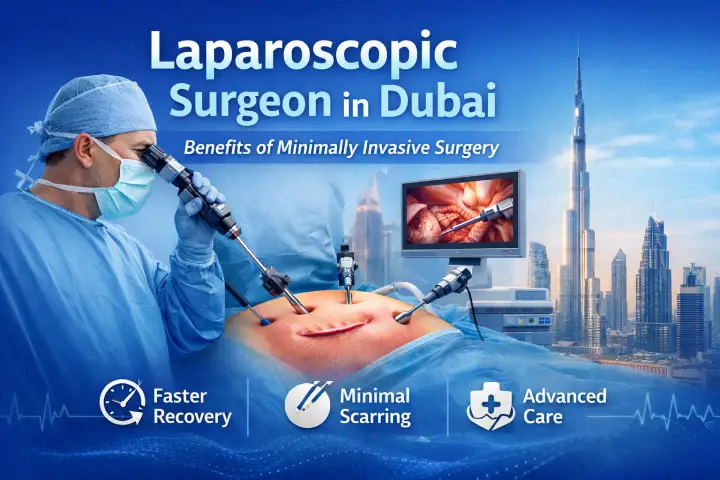
Laparoscopic Surgeon in Dubai – Benefits of Minimally Invasive Surgery
By Dr. Appou Tamijmarane | MS, FRCS (Edinburgh), FRCS (Glasgow)
Consultant General Surgeon specialising in HPB, Upper GI, and Advanced Laparoscopic Surgery
Fakeeh University Hospital, Dubai Silicon Oasis | DHA Licence No: 50530660-001
Published: April 2026 | Last reviewed: July 2026
Reading time: 8 minutes | Written for patients in Dubai exploring laparoscopic surgery. Dr. Appou Tamijmarane, Consultant Surgeon at Fakeeh University Hospital, explains what laparoscopic surgery is, its benefits, and what patients should realistically expect.
Key Takeaways
Laparoscopic (keyhole) surgery, when it is the right approach for the patient, allows most abdominal operations to be performed through small incisions, reducing recovery time and wound complications compared to open surgery.
- Dr. Appou Tamijmarane, FRCS (Edinburgh), FRCS (Glasgow), Consultant Surgeon at Fakeeh University Hospital, Dubai Silicon Oasis, performs laparoscopic, robotic, and open surgery across a range of general, HPB, and upper GI conditions.
- The choice between laparoscopic and open surgery depends on the individual patient — previous abdominal operations, the type of condition, and overall health all influence the decision.
- Laparoscopic surgery does not mean scarless or pain-free as small incisions are made and post-operative discomfort is normal and managed with pain control medicines.
- For detailed guidance on laparoscopic technique choices, robotic surgery, and Dr. Appou’s clinical decision process, see: Advanced Laparoscopic Surgery in Dubai.
- Dr. Appou consults in English and Tamil at Fakeeh University Hospital, Dubai Silicon Oasis. Book via Okadoc or call +971 503 567 569.
With over 35 years of surgical practice including 18 years as an NHS Consultant at Raigmore Hospital in Inverness, one of Scotland’s five regional cancer centers, I have performed laparoscopic surgery across a wide range of conditions: gallbladder disease, hernia repair, fundoplication, bile duct exploration, splenectomy, distal pancreatectomy, and esophageal cases. In my current practice at Fakeeh University Hospital in Dubai Silicon Oasis, advanced laparoscopic surgery is a central part of my surgical workload every week.
The purpose of this article is to explain what laparoscopic surgery is, what it genuinely offers patients, and what a realistic experience looks like. For detailed information on how I choose between laparoscopic, robotic, and open surgery for specific cases, see my dedicated page: Advanced Laparoscopic Surgery in Dubai.
What Is Laparoscopic Surgery?
Laparoscopic surgery, also called keyhole surgery or minimally invasive surgery, uses several small incisions, typically 5 to 12 mm each, through which a high-definition camera and precision instruments are passed. The surgeon operates using the camera image displayed on a monitor, rather than making a single large incision to access the operative field directly.
This approach is now the standard technique for many abdominal procedures. At Fakeeh University Hospital, I perform laparoscopic cholecystectomy (gallbladder removal), hernia repair, fundoplication (anti-reflux surgery), bile duct exploration, splenectomy, and a range of HPB and upper GI procedures using laparoscopic or robotic platforms.
What Are the Benefits of Laparoscopic Surgery?
The advantages of laparoscopic over open surgery are well established in the peer-reviewed literature. For suitable patients, these are the clinically meaningful differences:
| Benefit |
What it means for you |
| Smaller incisions |
Typically 3-4 cuts of 5-12 mm rather than one large wound means less tissue disruption |
| Reduced blood loss |
High-definition camera gives precise visualization, reducing inadvertent tissue damage |
| Lower wound infection risk |
A smaller wound area means less exposed tissue and a lower entry point for infection |
| Shorter hospital stay |
Most laparoscopic procedures are day-case or one-night admission for suitable patients |
| Faster return to activity |
Light activity typically within 5-10 days and full recovery in approximately 4-6 weeks for most procedures |
It is important to be clear that these advantages apply when laparoscopic surgery is the right choice for the patient. Not every procedure or every patient is suitable for a laparoscopic approach. The choice between laparoscopic, robotic, and open surgery depends on a careful individual assessment including factors such as any previous abdominal operations, the nature of the condition, and overall health of the patient.
For a full explanation of how that decision is made in practice, including information on what laparoscopic surgery cannot do, visit my Advanced Laparoscopic Surgery page.
What Conditions Can Be Treated Laparoscopically?
In my practice at Fakeeh University Hospital, laparoscopic techniques are used for:
- Gallbladder disease – laparoscopic cholecystectomy is the standard approach for gallstone disease and cholecystitis
- Hernia repair – inguinal, femoral, umbilical, incisional, and ventral hernias using TAPP or TEP laparoscopic techniques. See: Hernia Surgery in Dubai
- Acid reflux and hiatus hernia – laparoscopic fundoplication and hiatus hernia repair
- Bile duct stones – laparoscopic bile duct exploration and clearance
- Spleen conditions – laparoscopic splenectomy
- Pancreatic conditions – laparoscopic distal pancreatectomy for suitable cases
- Upper GI conditions – including achalasia (Heller’s myotomy) and selected esophageal procedures
Robotic-assisted surgery is also available at Fakeeh University Hospital for selected elective procedures where three-dimensional visualization adds a clinical advantage.
Laparoscopic Surgery at Fakeeh University Hospital, Dubai Silicon Oasis
I perform laparoscopic and robotic surgery at Fakeeh University Hospital, a HIMSS Stage 7-certified tertiary hospital in Dubai Silicon Oasis. The hospital has full laparoscopic and robotic surgical platforms, advanced pre-operative imaging including CT, MRI, and ultrasound, dedicated anesthetic and surgical nursing teams, and ICU facilities for complex cases.
Fakeeh University Hospital serves patients across south-east Dubai including Dubai Silicon Oasis, Dubailand, Academic City, Mirdif, Nad Al Sheba, Mudon, and Arabian Ranches. I consult in English and Tamil.
How to Choose a Laparoscopic Surgeon in Dubai
If you are considering a laparoscopic procedure in Dubai, these are the questions worth putting to any surgeon at your first consultation:
- What is your preferred approach for my condition, and why?
- Have you performed this procedure laparoscopically, and how often?
- Under what circumstances would you convert to open surgery, and how do you manage that decision?
- What are the realistic recovery timelines for my specific operation?
You can verify my DHA licence on the DHA Sheryan portal (Licence No: 50530660-001). For a full guide to choosing a general surgeon in Dubai, see: How to Choose a General Surgeon in Dubai.
Further Reading
In Summary
- Laparoscopic surgery offers genuine advantages over open surgery for many patients with smaller incisions, faster recovery and lower infection risk.
- The right approach depends on your individual case. Dr. Appou discusses all options at consultation before recommending a surgical plan.
- For detailed information on laparoscopic technique selection, robotic surgery, and what to expect, visit: Advanced Laparoscopic Surgery in Dubai.
- To book a consultation at Fakeeh University Hospital, Dubai Silicon Oasis: call +971 503 567 569 or book via Okadoc.
Frequently Asked Questions: Laparoscopic Surgery in Dubai
What is the difference between laparoscopic and open surgery?
Laparoscopic surgery uses several small incisions (5-12 mm) with a camera and precision instruments, rather than one large incision. For suitable patients, this means less blood loss, lower wound infection risk, shorter hospital stays, and faster return to normal activity. The right approach depends on the individual patient and procedure.
Is laparoscopic surgery available at Fakeeh University Hospital in Dubai?
Yes. Dr. Appou Tamijmarane performs laparoscopic, robotic, and open surgery at Fakeeh University Hospital, a HIMSS Stage 7-certified tertiary hospital in Dubai Silicon Oasis, for a full range of general, HPB, and upper GI conditions.
Does laparoscopic surgery leave scars?
Yes, laparoscopic surgery leaves small scars at each incision site, typically 5-12 mm. These are significantly smaller than an open surgical wound and heal well. There is no completely scarless surgical approach.
Will I have pain after laparoscopic surgery?
Some post-operative discomfort is normal after any surgery, including laparoscopic procedures. This comes from both the incision sites and from internal dissection. The degree of discomfort depends on the complexity of the procedure and is managed with a structured analgesia plan provided before discharge.
How long is recovery after laparoscopic surgery in Dubai?
For laparoscopic procedures such as hernia repair or cholecystectomy, most patients return to light activity within 5-10 days and full activity within 4-6 weeks. Major laparoscopic procedures require longer recovery. Individual timelines depend on the operation, the patient’s age, and overall fitness.
What conditions can be treated laparoscopically by Dr. Appou?
Dr. Appou performs laparoscopic surgery for gallbladder disease, hernia repair, acid reflux and hiatus hernia, bile duct stones, spleen conditions, selected pancreatic cases, and upper GI conditions including achalasia. Robotic-assisted surgery is also available for selected elective procedures at Fakeeh University Hospital.
How do I book a laparoscopic surgery consultation in Dubai?
Book via
Okadoc. Dr. Appou consults in English and Tamil at Fakeeh University Hospital, Dubai Silicon Oasis.
Can I get a second opinion on a recommended laparoscopic procedure?
Yes, Dr. Appou actively welcomes second opinions for patients facing any surgical decision. Bring all previous imaging and correspondence to your consultation.
1. Buia A, Stockhausen F, Hanisch E. Laparoscopic surgery: A qualified systematic review. World J Methodol. 2015;5(4):238-254.
2. NICE. Laparoscopic surgery for colorectal cancer (TAG98). National Institute for Health and Care Excellence, 2006. Available: www.nice.org.uk/guidance/tag98
3. HerniaSurge Group. International guidelines for groin hernia management. Hernia. 2018;22(1):1-165.
Medical Disclaimer: This article is written for general educational purposes and does not constitute medical advice, diagnosis, or treatment. Individual surgical decisions must be made in consultation with a qualified healthcare professional following full clinical assessment. Dr. Appou Tamijmarane is licensed by the Dubai Health Authority (DHA Licence No: 50530660-001) and practices as a Consultant General Surgeon at Fakeeh University Hospital, Dubai Silicon Oasis, UAE.