
07 October 2025
When a patient comes to see me for the first time, they have usually already spent time searching online for answers about their symptoms, reading about the procedure they think they need, and looking to find the right surgeon for them. That last question is often the one they find hardest to navigate. I have been a Consultant General Surgeon for over 35 years, 18 of them as an NHS consultant in the UK and now at Fakeeh University Hospital in Dubai Silicon Oasis. In this guide, I want to answer honestly and directly the questions I hear most often from patients who are trying to make that decision.
General surgery is a broader specialty than the name suggests. A consultant general surgeon manages surgical conditions affecting the abdomen and digestive system including gallbladder disease, appendicitis, hernias, acid reflux and hiatus hernia, colorectal conditions, skin and soft tissue lumps but also complex surgeries based on their specialist interest. For me, my passion is Upper Gastrointestinal (UGI) and Hepato-pancreato-biliary (HPB) Surgery which covers the liver, pancreas, stomach, and esophagus. In my own practice, I perform the full range of general and laparoscopic surgery alongside my specialist HPB surgery (hepatobiliary-pancreatic surgery), upper GI surgery, robotic procedures, and laser anorectal surgery. I also perform diagnostic and therapeutic endoscopies, including ERCP for bile duct stones. Having asked Google, patients often come to my clinic with some idea of what they think maybe the cause of their symptoms, only for investigations to reveal a more complex underlying condition. Experience across a wide range of surgical conditions is therefore important, not just in the procedure you think you need.
Patients often come to me after weeks or months of symptoms that have been self-managed or are referred from primary care level. Here are the symptoms that should prompt a surgical consultation rather than continued waiting:
Dubai has a large and varied surgical workforce. Here is what I would look for if I were advising a family member.
Every surgeon practicing in Dubai must hold a valid license from the Dubai Health Authority (DHA). You can verify any surgeon’s license on the DHA Sheryan portal. Check that the title on their license, Consultant, Specialist, or Senior Specialist, matches how they present themselves. The DHA title reflects the authority’s assessment of the surgeon’s training and experience level, and it matters. I am licensed by the Dubai Health Authority as a Consultant General Surgeon (DHA License No: 50530660-001), and I practice at Fakeeh University Hospital, Dubai Silicon Oasis.
Surgical training varies enormously between countries and institutions. In the UK system, the Fellowship of the Royal Colleges of Surgeons (FRCS) represents completion of a structured, externally examined training program in a surgical specialty. It is one of the most rigorous postgraduate surgical qualifications in the world. I hold two FRCS fellowships, from both Edinburgh and Glasgow, along with a Certificate of Completion of Training (CCT) in General Surgery from the UK. These qualifications meant I had successfully achieved the knowledge, skills and experience to become a Consultant Surgeon. I then practiced for 18 years as a Consultant General Surgeon in the NHS at Raigmore Hospital in Inverness, managing complex and routine surgical cases. Raigmore is one of the 5 cancer Hospitals in Scotland. I have now practiced in Dubai for over a year. Make sure to look for a surgeon’s postgraduate qualifications on their profile and, if in doubt, check with the issuing institution.
A surgeon who performs a high volume of a specific procedure will generally have better outcomes than one who performs it rarely. It is entirely reasonable to ask a surgeon how many times they have performed the procedure you need, and what their complication rate is. The right surgeon will answer this question without hesitation. That said, range of experience also matters, particularly for complex or unusual cases. A surgeon who has managed cancer cases in a multidisciplinary team setting, performed emergency laparotomies, and handled complex HPB surgery has a depth of clinical judgement that extends well beyond any single procedure.
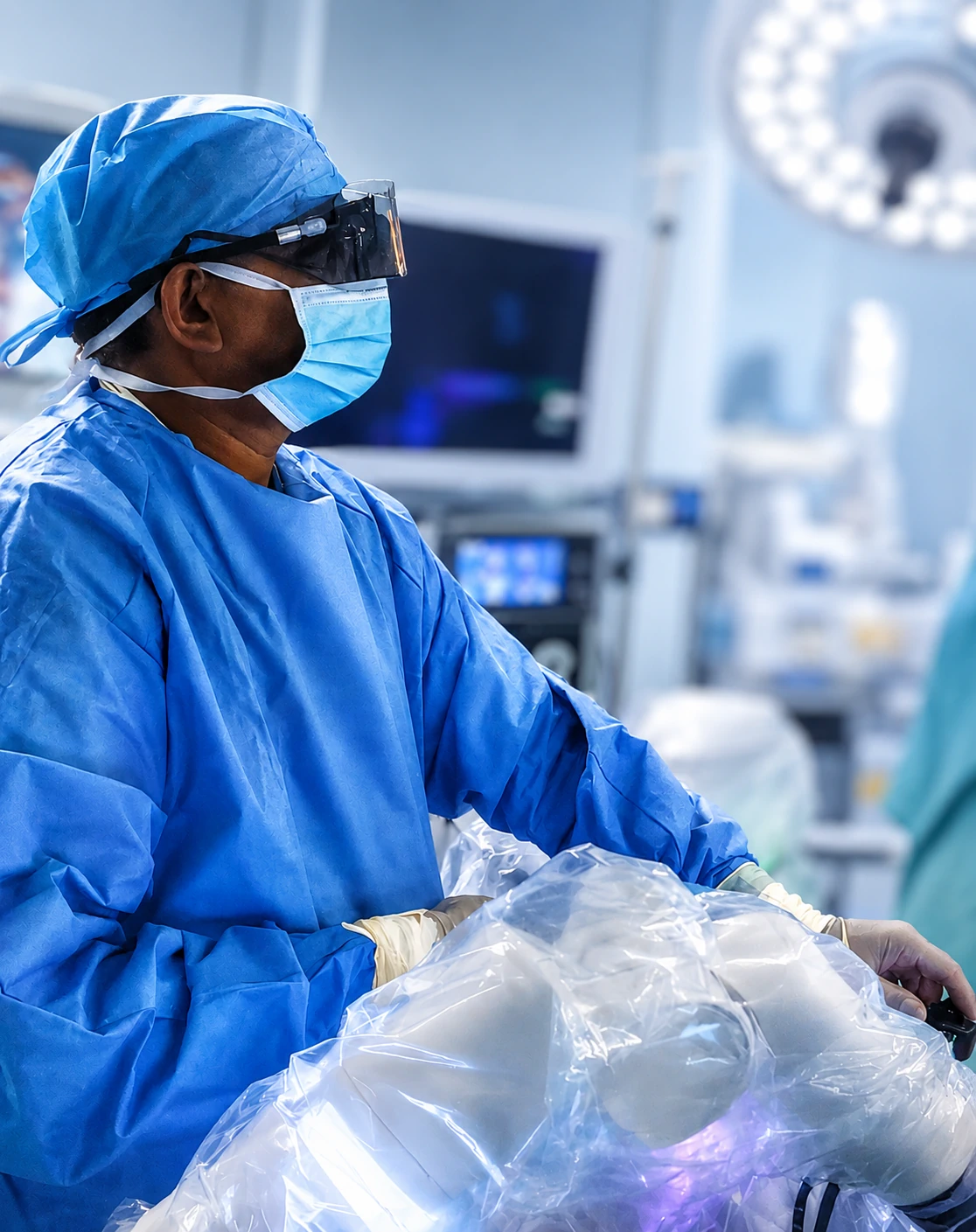
Over the past two decades, laparoscopic (keyhole) surgery has transformed how most abdominal procedures are performed. Smaller incisions mean less postoperative pain, a shorter hospital stay, faster return to normal activity, and reduced infection risk. Robotic-assisted surgery adds further precision in selected cases. However, and this is important, the ‘best’ surgical approach is always the one that is safest for your specific anatomy and condition, not the one that sounds most advanced. I perform laparoscopic, robotic, and open surgery, and I choose the approach based on the patients clinical picture, health status and their wishes; we make a plan together. If a surgeon can only offer one approach for all cases, that is worth probing.
Successful surgery comes from team work. The outcome of a complex operation depends not only on the surgeon but on the anesthetist, the nursing team, the critical care unit, the radiology department, and for cancer cases, the multidisciplinary tumor board. At Fakeeh University Hospital, I work alongside a full surgical team with access to robotic platforms, advanced imaging, and a dedicated ICU. This infrastructure matters, particularly for anything beyond a routine elective procedure.
Patient communication is one of the things my patients mention most often in their feedback, and it is something I take seriously. A surgeon who explains your diagnosis in plain language, outlines your options including non-surgical alternatives, is honest about risks and recovery, and gives you time to ask questions is a surgeon who is treating you as a partner in your care rather than a case to be managed. If you leave a consultation feeling confused, rushed, or pressured, it is worth seeking a second opinion. I actively encourage second opinions for any patient facing a major operation.
A thorough first consultation should include:
My practice at Fakeeh University Hospital covers the full range of general, laparoscopic, and HPB surgical care. A summary of the conditions I treat and the procedures I perform is available on my Treatment and Procedures page, but in brief:
Choosing a surgeon is a significant decision, and I would never suggest you should make it quickly. Research the surgeon’s credentials, read their patient reviews, verify their DHA license, and ask whatever questions you need answered at the consultation. If something does not feel right, trust that instinct and get a second opinion. What I can tell you from 35 years of surgical practice is this: the patients who do best are the ones who are well informed, who ask questions, and who are genuinely involved in decisions about their care. My job is to give you the clinical expertise and honest guidance to make that possible.
To arrange a consultation with Dr Appou at Fakeeh University Hospital use FUH’s live booking system on Okadoc. Alternatively to message him via WhatsApp or call reach him on +971 503 567 569 or Email: Dr Appou hereA consultant general surgeon diagnoses and surgically treats a wide range of conditions affecting the abdomen, digestive system, and soft tissues, including gallbladder disease, hernias, appendicitis, acid reflux, colorectal conditions, and cancer. In Dubai, all consultant general surgeons must hold a valid DHA license, which verifies their qualifications and experience against a national standard.
You can verify any surgeon’s DHA license on the DHA Sheryan medical directory. Enter the surgeon’s name to confirm their license is active, their registered specialty title, and the facility where they are licensed to practice.What is the difference between a Consultant and a Specialist surgeon in Dubai?
The DHA licensing system uses tiered titles: Consultant, Senior Specialist, and Specialist. A Consultant title reflects the highest level of training, experience, and seniority assessed by the DHA, broadly equivalent to a fully-trained NHS Consultant in the UK or an attending physician in the US system. When choosing a surgeon for a complex procedure, a Consultant-grade surgeon is the appropriate level of seniority.
Look for a recognized primary medical degree (MBBS or equivalent), a postgraduate surgical qualification (such as FRCS, FACS, or a national board certification), and ideally subspecialty training in the area relevant to your condition. Verify that their DHA license is current and that the title on their license matches how they present themselves.
Not always. Laparoscopic (keyhole) surgery offers real advantages for many elective procedures, less pain, smaller scars, shorter recovery. But open surgery remains the correct approach for certain complex cancer operations, emergency cases, or patients whose anatomy makes keyhole access unsafe. The right approach depends on your specific condition and anatomy, not on which technique sounds more advanced.
Appointments can be booked online via FUH’s live booking system on Okadoc or if your would rather make an initial enquiry before booking to see Dr Appou calling +971 503 567 569. Urgent referrals will be accommodated as soon as possible. If you have been referred by another physician with imaging or blood results, bring those to the first appointment.
Chat