
23rd April 2026
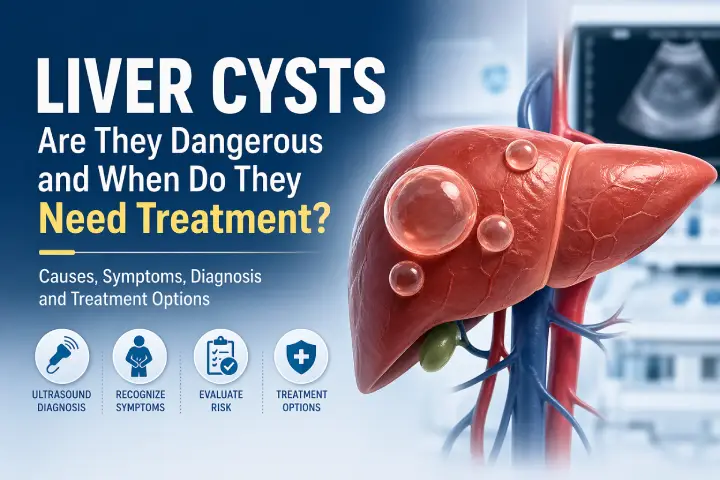
Liver cysts are increasingly detected today due to widespread use of ultrasound and advanced imaging. In most cases, they are harmless findings that do not indicate serious liver disease. However, understanding their nature helps reduce unnecessary anxiety and ensures timely medical attention when needed.
For a broader medical overview of liver cysts and liver conditions, you can refer to MedlinePlus (U.S. National Library of Medicine), a trusted non-competitor health information resource.
For a more detailed clinical discussion on liver tumors and cysts, you may also refer to the pillar guide here:
https://www.drappou.com/news-events/liver-tumors-and-cysts-types-symptoms-diagnosis-treatment/Liver cysts are fluid-filled sacs that develop within the liver tissue. Most of them are discovered incidentally during scans performed for unrelated reasons such as abdominal pain or routine health checkups.
The majority are simple liver cysts, which are:Most liver cysts do not produce symptoms. When symptoms occur, they are usually related to size or pressure effects.
Possible symptoms include:In most cases, they are not dangerous. More than 90% are simple and benign, meaning they do not become cancerous or affect liver function.
However, they may need attention if:In most cases, imaging alone is sufficient to confirm a benign cyst.
Most of them require no treatment and only observation.
Treatment may be considered when:Symptoms are present: Ongoing abdominal pain or discomfort
Cysts are large: Usually when they cause pressure effects
Complications develop
To rule out rare cystic tumors
Minimally invasive techniques are commonly preferred due to faster recovery.
Liver cysts are very common incidental findings and are usually harmless. Most people never experience symptoms or complications. Treatment is only required in selected cases based on size, symptoms, or diagnostic uncertainty.
If a liver cyst is detected, proper evaluation by a specialist ensures accurate diagnosis and prevents unnecessary worry.