31 March 2026
Benign Liver Tumors Explained: Symptoms, Diagnosis & Treatment Guide
Not all liver tumors are cancerous. In fact, a large number of liver growths are benign liver tumors, meaning they are non-cancerous and often harmless. However, understanding their types, causes, and symptoms is essential to determine when medical attention is necessary.
In this guide, we’ll break down everything you need to know about benign liver tumors and how they differ from more serious conditions.
👉 For a complete overview of all liver-related conditions, including cysts and malignant tumors, read our
Comprehensive Guide to Liver Tumors and Cysts: Types, Symptoms, Diagnosis & Treatment Options.
What Are Benign Liver Tumors?
Benign liver tumors are abnormal growths in the liver that do not spread to other parts of the body. Most are discovered incidentally during imaging tests done for other reasons.
They are generally slow-growing and may not require treatment unless they cause symptoms.
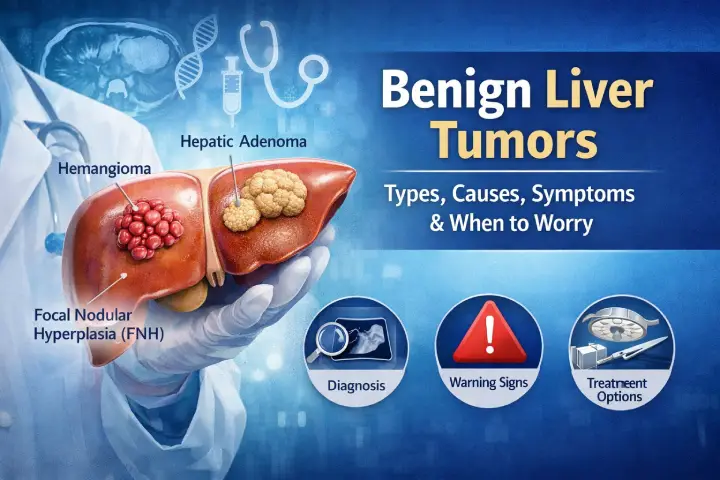
Common Types of Benign Liver Tumors
- Liver Hemangioma
- Most common type
- Made up of blood vessels
- Usually asymptomatic
- Hepatic Adenoma
- Linked to hormonal factors (e.g., oral contraceptives)
- More common in women
- May require monitoring or removal if large
- Focal Nodular Hyperplasia (FNH)
- Second most common benign tumor
- Typically does not require treatment
- Rarely causes symptoms
What Causes Benign Liver Tumors?
The exact cause is not always known, but several factors may contribute:
- Hormonal influences
- Genetic predisposition
- Long-term medication use
- Underlying liver conditions
In some cases, evaluation by a liver surgeon or
HPB Surgeon may be recommended to rule out complications.
Symptoms of Benign Liver Tumors
Most benign liver tumors do not cause symptoms. However, when they grow larger, you may experience:
- Mild abdominal discomfort
- Feeling of fullness or bloating
- Pain in the upper right abdomen
How Are Benign Liver Tumors Diagnosed?
Diagnosis typically involves:
- Imaging Tests
- Blood Tests
- Biopsy (if needed)
- Rarely required
- Helps confirm diagnosis in uncertain cases
When Should You Worry?
While benign tumors are usually harmless, medical attention is needed if:
- The tumor grows rapidly
- You experience persistent pain
- There is uncertainty in diagnosis
- Risk of rupture (in large adenomas)
- Symptoms affect daily life
At this stage, evaluation by a minimally invasive surgeon in Dubai becomes important.
Treatment Options
- Observation
Most cases require only regular monitoring
- Medications & Lifestyle Changes
Discontinuing hormone-based medications (if applicable)
- Surgical Removal
Recommended when:
- Tumor is large
- Symptoms are severe
- There is risk of complications
Procedures are often performed using laparoscopic surgery, ensuring faster recovery and minimal scarring by laparoscopic specialists in Dubai.
Role of Minimally Invasive Surgery
Modern techniques like keyhole surgery allow safe and effective removal of certain benign tumors.
Benefits include:
- Smaller incisions
- Reduced hospital stay
- Faster healing
Benign vs Malignant Liver Tumors
A key concern for patients is distinguishing benign tumors from cancerous ones.
- Benign tumors → Non-cancerous, slow-growing
- Malignant tumors → Cancerous, may spread
👉 To understand this in detail along with liver cysts and advanced treatments, refer to our pillar guide on liver tumors and cysts.
Conclusion
Benign liver tumors are common and often harmless, but they should not be ignored entirely. Regular monitoring, timely diagnosis, and consultation with the right specialist—such as a liver surgeon — ensure peace of mind and proper care.